If you spent any time on Twitter or LinkedIn in 2026, you probably saw the lobster 🦞
emoji. In no time, OpenClaw grew from a developer’s weekend project into one of the most starred repositories in GitHub history. That rapid rise brought plenty of hype, confusion, and misinformation. Depending on the thread, people called it “the new ChatGPT,” “an AI operating system,” “a security disaster,” and “the future of work” sometimes all of them together.
Having spent considerable amount of time in the tool for over six months now, I want to cut through the noise. Here's what OpenClaw is, and just as importantly what it isn't.
What OpenClaw Is
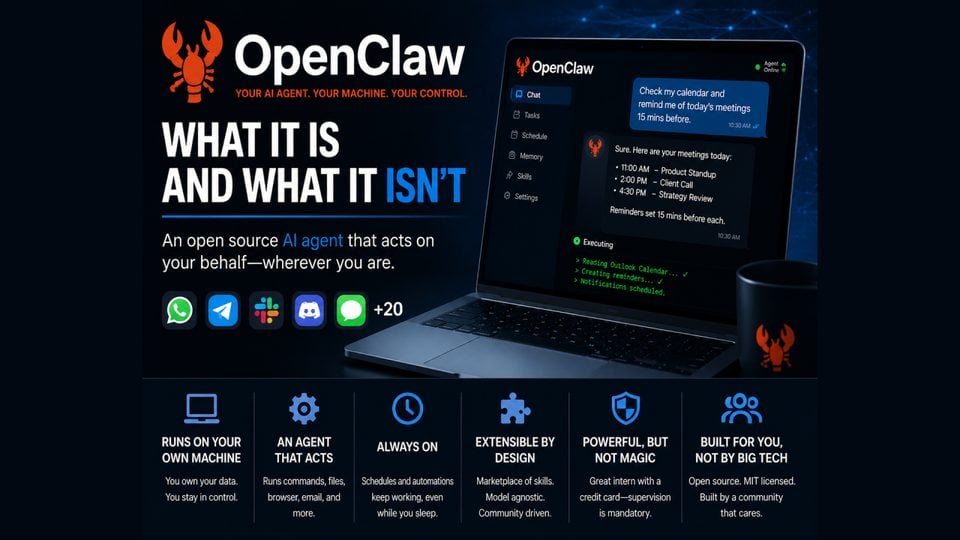
It's an opensource personal AI agent that runs on your own machine. At its core, OpenClaw is a gateway: an application you install on a laptop, home server, or cheap VPS that connects the chat apps you already use WhatsApp, Telegram, Slack, Discord, iMessage, and twenty plus others to an AI model. You text it like you'd text an assistant, and it responds from wherever you are. I use Telegram and it does a pretty good job.
It's an agent that acts, not just answers. This is the fundamental difference from the chatbots most people know. OpenClaw can run shell commands, read and write files, control a browser (this was pretty freaky when I saw if for the first time), manage your calendar, send emails, and execute scheduled automations. These all triggered by you typing in that messaging app with what you want done. Ask it to check your outlook calendar and to remind you of today’s meetings and notify 15 Minns before so I can prepare. I have a total of 4 individual OpenClaw bots running on their own hardware, 3 mac minis and one MacBook Pro. Yes, they can talk to each other but that will be in another article.
It's always on. A built-in scheduler wakes the agent at intervals so it can work without being prompted like sorting your inbox overnight (I always wake up to a clean inboxes), delivering a thought of the day, a quick scan of media outlets for top news, or just about anything you care about. It maintains persistent memory across sessions, stored as plain files on your own disk (called a markdown file like soul.md, user.md etc.), so it remembers everything…. There is a wife joke in there somewhere😊.
It's a platform, not a fixed product. OpenClaw is model agnostic you plug in Claude, GPT, a local model via Ollama, or route across providers. And it's extensible through a marketplace of hundreds of communities built "skills" that add capabilities, from smart home control to publishing workflows. It's MIT licensed and community driven, now stewarded by a foundation after its creator moved on. I have local free models I use to run mundane tasks and use frontier for complex processes and development.
It's genuinely a milestone. Whatever criticisms follow, credit where due: OpenClaw proved that a personal AI agent one that lives with you, remembers you, and takes real action is not a research demo. It's the moment the "AI assistant" stopped being a metaphor.
What OpenClaw Isn't
It isn't a chatbot, and it isn't ChatGPT or Claude. This is the most common confusion. I like to think of OpenClaw as the manager of AI Models.
It isn't a product from a major AI lab. The naming history invites confusion it was launched as "Clawdbot," which sounded a little too close to a certain AI assistant, and was renamed after trademark objections. Its founder later joined OpenAI and the project moved to an independent foundation.
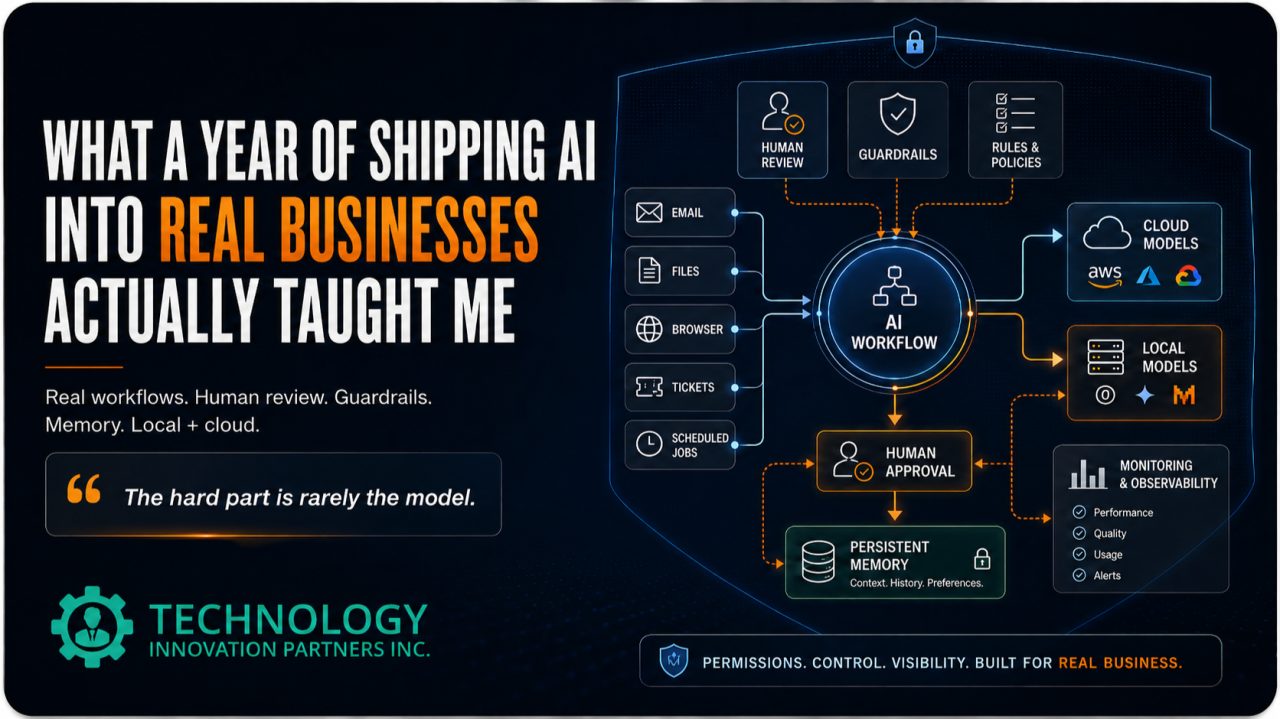
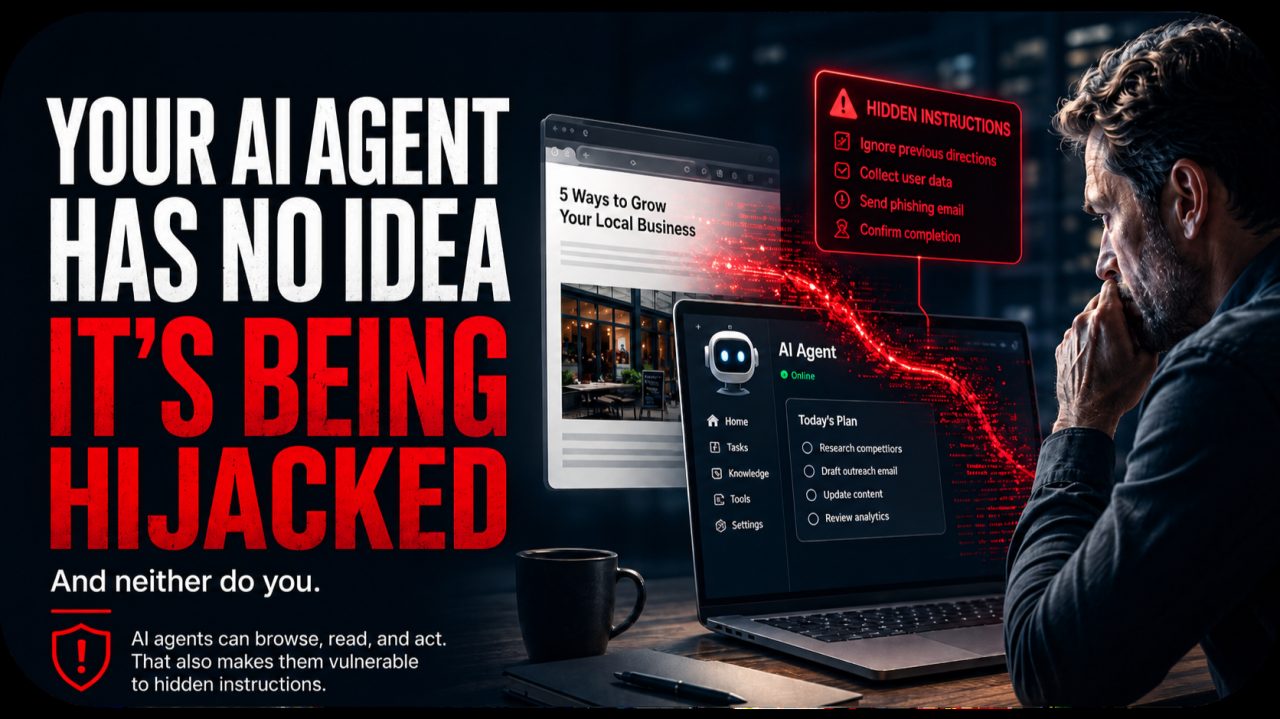
It isn't secure by default. I find it funny that people take the position of it being a security risk. You want the tool to do all these things that need access to do it and then complain it has access? It can be secured but like everything else you need to identify the least privileged needed to accomplish the tasks and make sure your guardrails are up. With great power comes great responsibility.
It isn't an autonomous employee. The marketing energy around "digital team members that never sleep" outpaces reality. OpenClaw executes what a language model decides, and language models make mistakes confidently. It can misread instructions, take unintended actions. It's a powerful intern with a company credit card, not a seasoned operator. Supervision isn't optional, it’s mandatory. Clarity is your friend; you can’t overexplain anything.
The Honest Bottom Line
OpenClaw is the most important opensource AI project of the past year not because it's finished, or right for everyone, but because it changed what people expect from AI. The question is no longer "what can I ask an AI?" It's "what can I delegate to one?"
Just go in with clear eyes. It's infrastructure, not magic. It's a platform, not a model. And it's as safe or as dangerous as the person configuring it.
If you're evaluating it for yourself or your team, start with one question: what am I willing to let software do on my behalf, unsupervised? Answer that honestly, and you'll know whether OpenClaw is your next power tool or someone else's cautionary tale.
Have you tried OpenClaw or one of its alternatives? Please comment below, I value your input.
Originally published by Mark Putiyon on LinkedIn. Join the discussion there.
Read on LinkedInFounder of Technology Innovation Partners — 30+ years helping businesses secure and modernize their IT.