I've been quietly testing the AI models everyone argues about Qwen, GLM, OpenAI's GPT-5.5, and Anthropic's Opus 4.8. Here's the part nobody tells you:
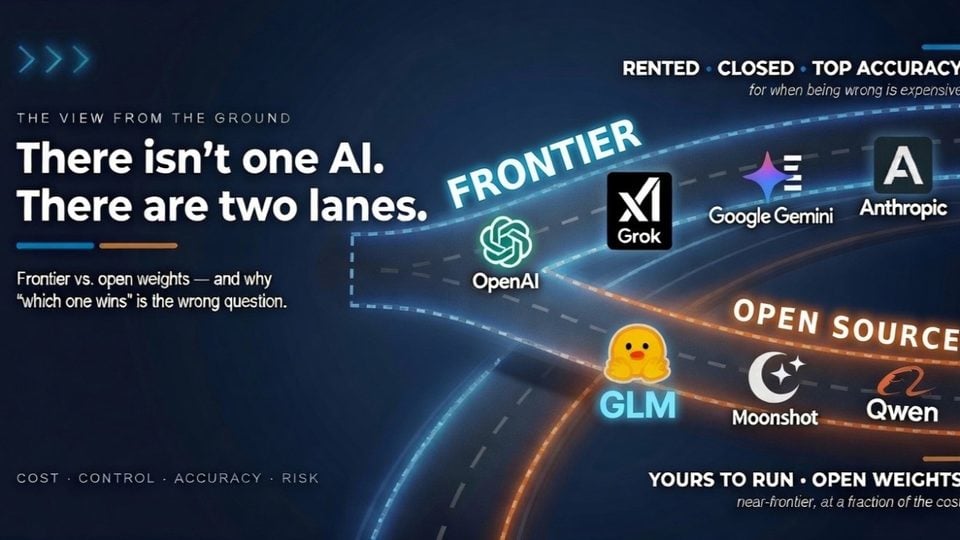
There isn't one type of AI. There are two main lanes, and they're heading in different directions.
On one side: the frontier models. The expensive, top-of-the-line ones from labs like Anthropic, OpenAI, and Grok/xai, Gemini. You rent them, you can't see inside them, and when being wrong is costly, they're worth every penny.
On the other side: open source like Moonshot, Qwen, GLM. A Chinese lab dropped a model called KIMI 2.6 at full precision a couple weeks ago that you run on your own servers free, and it lands within a hair of the best closed models and the cost is hardware. But "free" has a catch: depending on the precision you need, the hardware costs to actually run it are really high.
So, which one wins? Wrong question.
If you’re in a hospital, a bank, a law firm anywhere, a mistake is expensive, you pay for the frontier. When "perfect" matters, you buy the best.
But if you're running high volume where "very good" is plenty, or you need your data to stay on your own machines, the free option that was a toy a year ago is now a real tool.
"Which AI" is quietly becoming a business decision, not a tech one. Cost, control, accuracy, and risk the same trade-offs every other part of a company already weighs.
I'm going to keep writing about what I'm seeing because I actually use these tools. No hype, just the view from the ground.
If you've used one of these models for real work, did it deliver? Curious what's working for you.
Originally published by Mark Putiyon on LinkedIn. Join the discussion there.
Read on LinkedInFounder of Technology Innovation Partners — 30+ years helping businesses secure and modernize their IT.